Understanding factors that increase spa energy consumption is critical for hot tubs owners who prefer relaxing, warm soaks without exorbitant spending on heating costs. Many owners underestimate how daily habits, quality of equipment, and environmental factors influence energy consumption. Many energy impact factors in spa ownership and usage increase hot tub energy consumption and are largely unnoticed until operating costs increase. Analyzing factors that affect energy consumption in hot tub use in winter is particularly critical, as colder temperatures increase heating demands.
Managers and owners are able, through learning, to increase efficiency and comfort while reducing and controlling waste year-round. This guide will outline factors that most influence energy use, their interactions, and best management practices for optimizing spa energy consumption.
Common Contributors
Ongoing problems that negatively affect spa energy consumption are numerous, but in most cases, are symptoms of inadequate heating, operational efficiency, and energy consumption habits.
- Hot tub support cabinets that are inadequately insulated
- Damaged spa covers or spa covers of low quality
- Rapid changes in temperatures
- Extended cycle times of spa filters
- Pump and heater systems that are older
- Wind and cold air exposure
Summary of Energy Impact Issue
| Factor | Energy Impact | Outcome |
| Insufficient insulation | Significant heat loss | Increased time for heating |
| Insufficient seal on covers | Repeated heating | Increased billing |
| Old components | Inefficient operation | Increased energy usage |
These directly connect to the small inefficiencies resulting in large operational cost increases, answers the question, What Factors Affect Hot Tub Energy Consumption?
What Factors Affect Hot Tub Energy Consumption in the Winter?
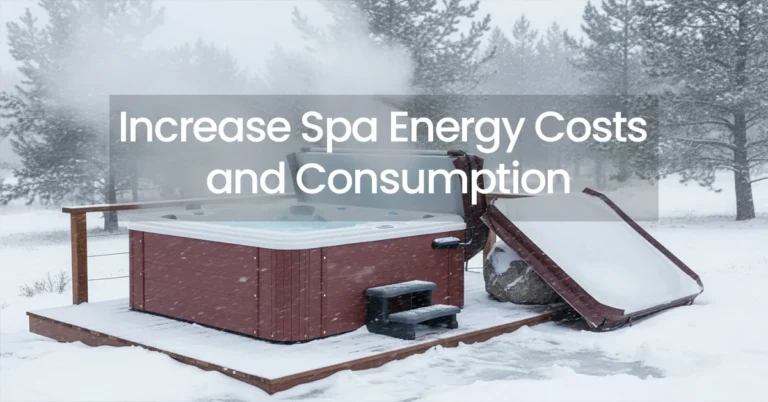
To increase energy usage for hot tub operation, cold weather is needed. What factors affect hot tub energy consumption in winter focuses on exposure to elements and retention of heat issues.
The following are winter related issues.
- The air is cold and will freeze.
- The spa sits on the cold ground.
- Covers that have snow on them.
- Higher losses with heat retention.
Winter Conditions Impact Summary
| Winter Elements | Effect on Energy |
| The air is cold | Water will cool faster |
| Snow on the cover | Provides less insulation to the cover |
| Wind | Increased heat loss |
During winter months, to maintain efficiency, hot tub covers and insulation will require the highest quality.
Quality of Hot Tub Insulation and Cover
Quality of insulation is at the core of What Factors Affect Hot Tub Energy Consumption? For hot tubs that are insulated well, the insulation retains heat, and the workload on the heaters is less.
Types of Insulation
- Fully Enclosed Foam
- Partially Enclosed Foam
- Thermal Wrap
Table of Insulative Efficacy
| Type of Insulation | Heat Retention | Level of Efficiency |
| Full Foam | Excellent | Very High |
| Partial Foam | Moderate | Medium |
| Thermal Wrap | Low | Low |
Effective insulation placed beneath your spa cover keeps energy-wasting factors (especially overnight and during winter months) from impacting your hot tub energy consumption the most.
Heating Adjustments and User Behavior
In the MIT study of spa user behavior, the most identifiable patterns contributing to the hot tub energy consumption were centered around the average user’s temperature setting and usage practices.
The following are considered ‘high-impact’ user habits:
- Setting temperatures above 38°C (which also increases energy use)
- Adjusting temperature settings (i.e. turning down the heat) and changing them frequently
- Leaving the spa cover open for extended periods
- Running spa jets when they are not needed
Read More: Performance and Energy Efficiency Guide.
Guide to Energy Use and Temperature Efficiency
| Water Temperature | Energy Use |
| 40°C | Very High |
| 38°C | Moderate |
| 35°C – 36°C | Low |
Consistent energy settings maintain the highest level of hot tub user comfort, with minimal energy consumption.
Installation location and the surrounding environment
The location of your spa installation greatly influences what factors affect hot tub energy consumption. A greater exposure to environmental elements increases heat loss.
Considerations for Placement
- Wind
- Shade/ Sun
- Ground Insulation
- Walls/Fencing
Placement Impact Table
| Location Feature | Energy Effect |
| Windy Areas | Higher Heat Loss |
| Sheltered Spots | Better Heat Retention |
| Insulated Base | Reduced Energy Waste |
Placement effectively reduces energy consumption in hot tubs, especially during winter use.
Equipment Efficiency and Maintenance
Mechanical efficiency is often overlooked when evaluating What Factors Affect Hot Tub Energy Consumption? In fact, bad maintenance leads to energy waste.
Equipment Related Issues
- Worn out heaters
- Inefficient circulating pumps
- Dirty or blocked filters
Maintenance Efficiency Table
| Component | Maintenance Action | Energy Benefit |
| Filters | Regular Cleaning | Better Circulation |
| Heater | Annual Inspection | Faster Heating |
| Pump | Timely Servicing | Lower Power Draw |
Maintaining equipment lowers factors that increase hot tub energy consumption and increases the lifespan of the spa.
LSI Keywords
hot tub insulation, spa heat loss, energy-efficient hot tubs, hot tub cover efficiency, winter spa energy use, hot tub heating costs, spa electricity usage
FAQs
Here are some frequently asked questions given below:
Why does my hot tub use more energy in winter?
Colder air and ground temperatures increase the rate of heat loss and force the heater to run for extended periods of time.
Does insulation really reduce hot tub energy costs?
Yes, correct insulation minimizes heat loss and decreases the number of heating cycles.
What temperature is most energy efficient?
The sweetest spot for energy savings and user comfort is in the range of 36-38°C.
How can I reduce energy use step by step?
Use a quality cover, shelter the tub, clean filters, and maintain steady temperatures.
Do old pumps increase electricity bills?
Yes, old pumps use more power to circulate water, so they are more inefficient.
Conclusion
Understanding what factors affect hot tub energy consumption helps spa owners control rising energy costs without sacrificing comfort. Simple adjustments—such as using better insulation and a high-quality cover, avoiding frequent temperature changes, protecting the hot tub from wind and cold, and regularly servicing filters, pumps, and heaters—can significantly reduce energy usage. By addressing these key areas, you can eliminate unnecessary energy expenses while keeping your hot tub efficient, reliable, and enjoyable year-round.