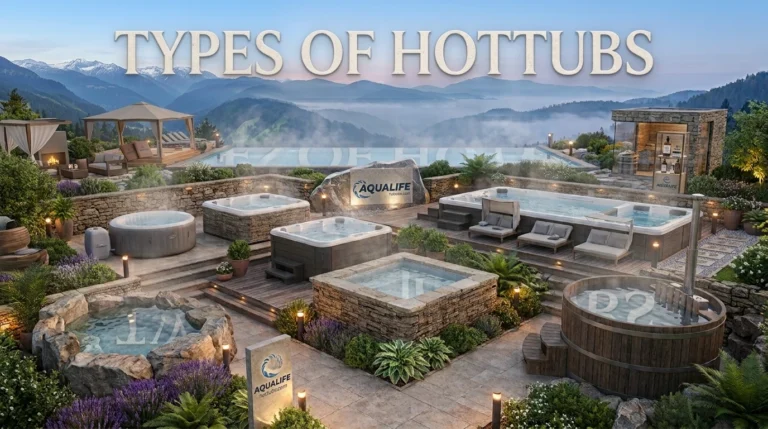
If you’ve started shopping for a hot tub, you’ve probably noticed pretty quickly that there isn’t just one “type” to pick from. There’s a whole range cheap inflatable setups you can toss in a closet during winter, all the way up to permanent in-ground installs that basically become part of your backyard. Each one has its own price tag, its own quirks, and honestly, its own kind of buyer. This guide walks through all seven so you’re not standing in a showroom (or scrolling a website) feeling lost.
Why It’s Worth Knowing the Different Options?
Here’s the thing a hot tub isn’t just a hot tub. Some are meant to be temporary or movable, something you set up on a patio and take with you if you relocate. Others are basically permanent structures that’ll still be there in twenty years. Before you spend money, it helps to know what you’re actually choosing between: cost, how it’s installed, how much it’ll cost to run, and what kind of soak you’re actually getting.
Quick Comparison: 7 Types of Hot Tubs at a Glance
| Hot Tub Type | Avg. Price Range | Best For | Portability |
|---|---|---|---|
| Inflatable Hot Tubs | $300–$800 | Renters, first-time buyers | Fully portable |
| Portable Hot Tubs (Acrylic) | $4,000–$10,000 | Most homeowners | Movable, needs setup |
| Plug and Play Hot Tubs | $3,500–$7,000 | Easy install, no electrician | Semi-portable |
| Acrylic Hot Tubs | $5,000–$12,000 | Long-term durability | Movable |
| Swim Spas | $15,000–$35,000+ | Fitness + relaxation | Permanent |
| In-Ground Hot Tubs | $10,000–$25,000+ | Custom backyard design | Permanent |
| Built-In Hot Tubs | $8,000–$20,000 | Seamless pool integration | Permanent |
Inflatable Hot Tubs
This is where most people start. Inflatable hot tubs are cheap, made of tough PVC, and you can literally deflate them and stuff them in a garage when you’re done. They’re a great way to test the waters (pun intended) before committing to something bigger great for renters, apartment dwellers, or anyone who just wants to try it out without spending thousands. They won’t hold up to daily use like the pricier models, but for the occasional soak, they get the job done.
Portable Hot Tubs
Ask around for “the best hot tub” and chances are someone points you toward a portable acrylic model. These run off a standard outlet or a 220V line, come loaded with jets and digital controls, and despite the name “portable” usually need a bit of setup. Still, if you ever move or want to rearrange your backyard, you’re not stuck. For most homeowners, this is the sweet spot between features and price.
Plug and Play Hot Tubs
If the idea of calling an electrician sounds like a headache, this is your category. Plug and play hot tubs run on regular 110V household power, so you can plug it in and go. You’ll trade off a few jets and slightly slower heat-up times compared to the 220V models, but for a lot of buyers, that trade-off is worth it just to avoid the extra installation cost.
Acrylic Hot Tubs
Acrylic hot tubs use a molded, fiberglass-reinforced shell sturdier and better insulated than the inflatable or rotomolded options. If you care about your energy bill, this is one of the better picks since the insulation actually keeps heat in instead of leaking it out. It’s a slightly bigger investment upfront, but it tends to pay off over the years.
Swim Spas
Think of a swim spa as a hot tub and a mini pool that had a baby. It uses adjustable currents so you can swim in place, which makes it popular with people who want a workout, not just a soak. They’re bigger and cost more, but if your household includes swimmers or you just want more than relaxation out of the investment, it’s worth a look.
In-Ground Hot Tubs
These get built directly into your landscaping often right next to a pool for that seamless, high-end look you see in magazine backyards. The trade-off is real construction: permits, contractors, and a bigger check up front. But if you’re going for a custom look that feels built-in rather than added-on, nothing else really compares.
Built-In Hot Tubs
Very similar to in-ground models, but usually tied directly into an existing pool sometimes sharing a water line or spilling over into the pool itself. These are popular for people going the whole luxury-backyard route, where how it looks matters just as much as how it feels to sit in it.
Read More: Low cost Hot tubs
How to Actually Choose?
A few things worth thinking through before you buy:
- Budget Inflatable and plug and play are your cheapest routes; in-ground and swim spas sit at the top of the price range.
- Space Small yard? Stick with something portable. Got room to build? In-ground or built-in makes sense.
- Who’s using it Couples tend to like the compact acrylic models; families or fitness-minded buyers lean toward swim spas.
- Climate Outdoor units need weather-resistant materials; indoor setups need proper ventilation so you’re not dealing with moisture issues.
- Long-term cost A well-insulated, energy-efficient model might cost more now but save you real money on heating over the years.
FAQs
Here are some common questions about the different types of hot tubs.
What’s the most popular type of hot tub?
Portable acrylic models best mix of price and features for most people.
What’s the cheapest option?
Inflatable hot tubs, usually $300–$800.
Plug and play vs. portable what’s actually different?
Plug and play runs on standard 110V power; portable models often need a 220V hookup for full performance.
Are swim spas actually worth the extra cost?
If you want both exercise and relaxation in one unit, yes otherwise a standard hot tub does the job for less.
Which type adds the most resale value?
In-ground and built-in tubs, since they’re permanent additions rather than something you could take with you.
Conclusion
At the end of the day, there’s no single “best” hot tub just the one that fits how you actually live. Maybe that’s an inflatable tub for weekend use, or maybe it’s a built-in feature that becomes the centerpiece of your backyard. Either way, now you know what’s out there, so you can pick with a bit more confidence.