A hot tub in the snow is one of the best things about owning one. But a hot tub that loses power in a freeze, with water sitting in its pipes, is one of the most expensive repair bills a spa owner can face. Before winter arrives, every owner needs to make one decision: keep it running, or shut it down properly?
This guide helps you make that call, then walks you through both options step by step.
Keep it running or winterize?
For most owners, keeping the hot tub running all winter is the safer and easier choice. A running spa circulates warm water through its pipes and most control packs have freeze protection that starts the pumps when the water gets close to freezing. Winterizing is the right choice when:
- You won’t use the tub for two months or more (a second home, a long trip).
- Your power supply is unreliable in storms and you can’t check the tub daily.
- The spa needs repairs you can’t get done until spring.
| Situation | Best choice |
|---|---|
| You use the tub at least weekly | Keep it running |
| Cabin or holiday home, empty for months | Winterize |
| Frequent winter power cuts, nobody home to check | Winterize |
| Plug and play spa in a very cold climate | Keep running with a thermal blanket, or winterize |
| Heater or pump fault you can’t fix until spring | Winterize |
Option 1: Keeping your hot tub running all winter
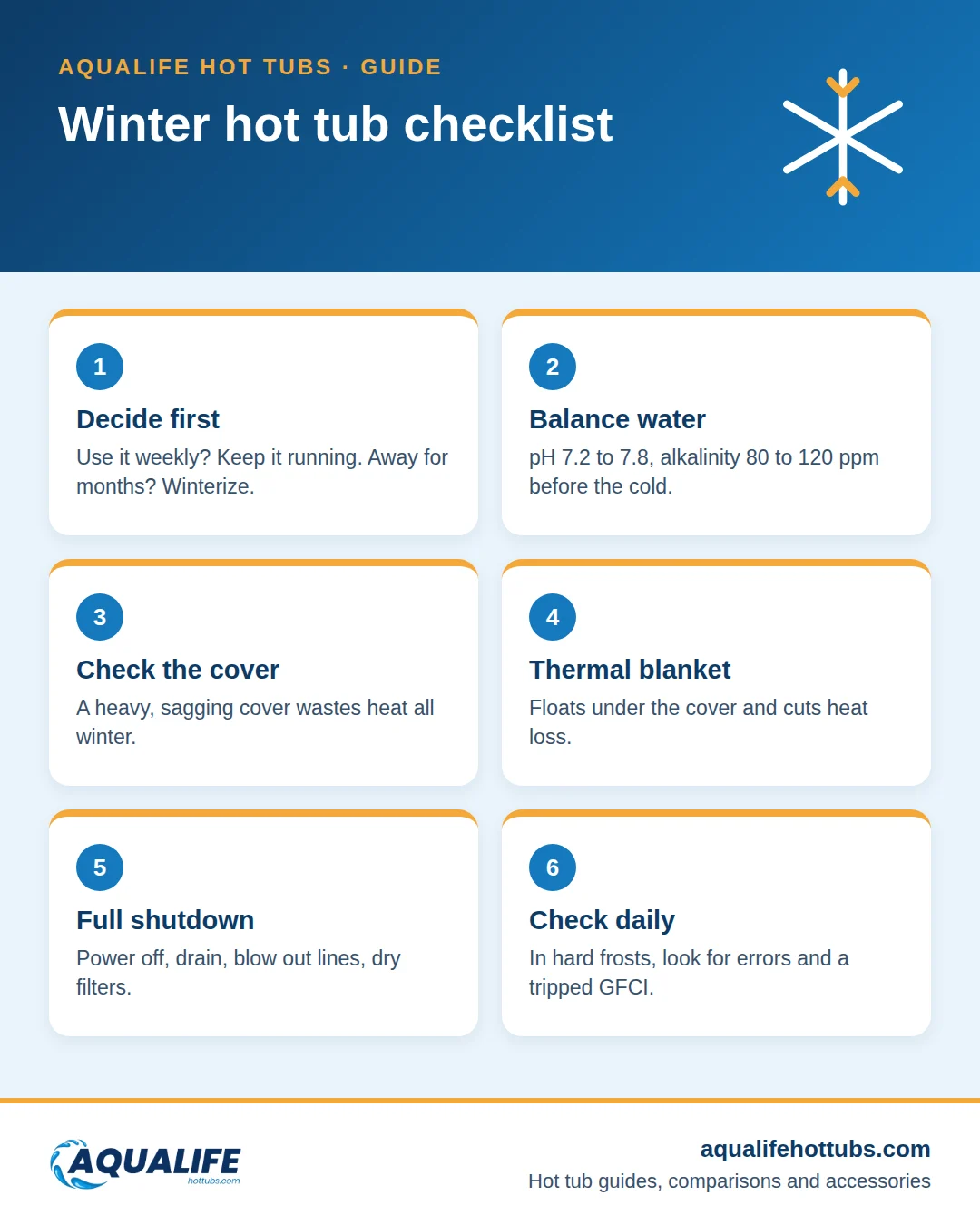
- Balance the water before the cold sets in. Aim for pH 7.2 to 7.8 and total alkalinity 80 to 120 ppm. Our hot tub water maintenance guide explains each step.
- Check the cover. A waterlogged, sagging cover lets heat escape and costs you money all season. If yours is heavy or cracked, read our cover replacement guide or see the covers in our hot tub accessories, such as the rectangular cover and square cover cap.
- Use a floating thermal blanket under the cover. It cuts evaporation and heat loss noticeably.
- Keep the temperature steady. Leaving the tub at 100 to 102°F uses less energy than letting it cool and reheating it before each soak.
- Clear snow from the cover so its weight doesn’t damage the foam cores or the hinge.
- Check the tub daily in hard frosts. Look for an error message on the topside panel and make sure water is circulating.
- Clean the filter monthly. Reduced flow can trigger flow errors and stop the heater. See how to change a hot tub filter.
Our winter hot tub accessories guide covers the extras that make cold-weather soaking easier, such as non-slip steps and robe hooks.
Option 2: How to winterize a hot tub step by step
Winterizing means removing every drop of water from the shell, pipes, pumps and heater. Water left in a low spot can freeze, expand and crack a fitting.
What you need
- A submersible pump or garden hose for draining
- A wet/dry shop vacuum
- Clean towels and a sponge
- Spa-safe surface cleaner
- Non-toxic RV/spa antifreeze (propylene glycol only, never automotive antifreeze), if your manual recommends it
Steps
- Turn off the power at the breaker or GFCI, not just the topside panel.
- Drain the tub. Open the drain valve or use a submersible pump. Our filling and draining guide explains the quickest way.
- Remove the filters. Clean them, let them dry completely, and store them indoors.
- Blow out the lines. Use the shop vacuum on the “blow” setting at each jet and at the filter housing. Water will spray out of the other jets, so cover them as you go. Then switch to “suck” and pull water from the drain and footwell.
- Loosen the pump unions (with the power off) so any water left in the pumps can drain. Don’t remove them fully unless your manual says to.
- Add spa antifreeze to the plumbing if your manufacturer recommends it, following its instructions. Flush it out completely when you refill in spring.
- Dry the shell with towels, clean it, and leave the drain open.
- Close the cover and lock the straps. A cover lifter or tie-downs help in windy areas.
Common winter problems and fixes
| Problem | Likely cause | Fix |
|---|---|---|
| Heater can’t keep up | Small 120V heater, poor cover, wind | Thermal blanket, windbreak, consider 240V conversion |
| FLO or flow error | Dirty filter or low water | Clean filter, top up water |
| Ice on the cover | Heat escaping or snow melting | Clear snow, check cover seal |
| Tub loses power | Tripped GFCI | Reset, then investigate the cause before leaving it |
If heat-up is your main issue, our guide to how long a hot tub takes to heat up explains what slows it down.
Spring restart checklist
- Tighten the pump unions and close the drain.
- Refill with a garden hose through the filter housing to reduce airlocks.
- Flush antifreeze if you used it, then refill.
- Balance the water and shock the tub before the first soak.
Frequently asked questions
Can a hot tub freeze if it’s running?
It’s unlikely while the power is on and the water is circulating. The risk comes from a power cut or a tripped GFCI. Check the tub daily in freezing weather.
How cold is too cold for a hot tub?
A running, well-covered spa handles sub-zero temperatures. Plug and play spas may struggle to hold temperature in very cold, windy weather. See plug and play vs 240V hot tubs.
Should I drain my hot tub for winter?
Only if you plan to shut it down for months. A drained tub must be completely dry inside the plumbing, or it can still freeze.
The bottom line
If you can check your tub regularly, keep it running, covered and balanced. If you can’t, winterize it fully. Either way, a good cover is your best defense against both freezing and high bills. Browse covers and accessories for AquaLife spas.